.png)

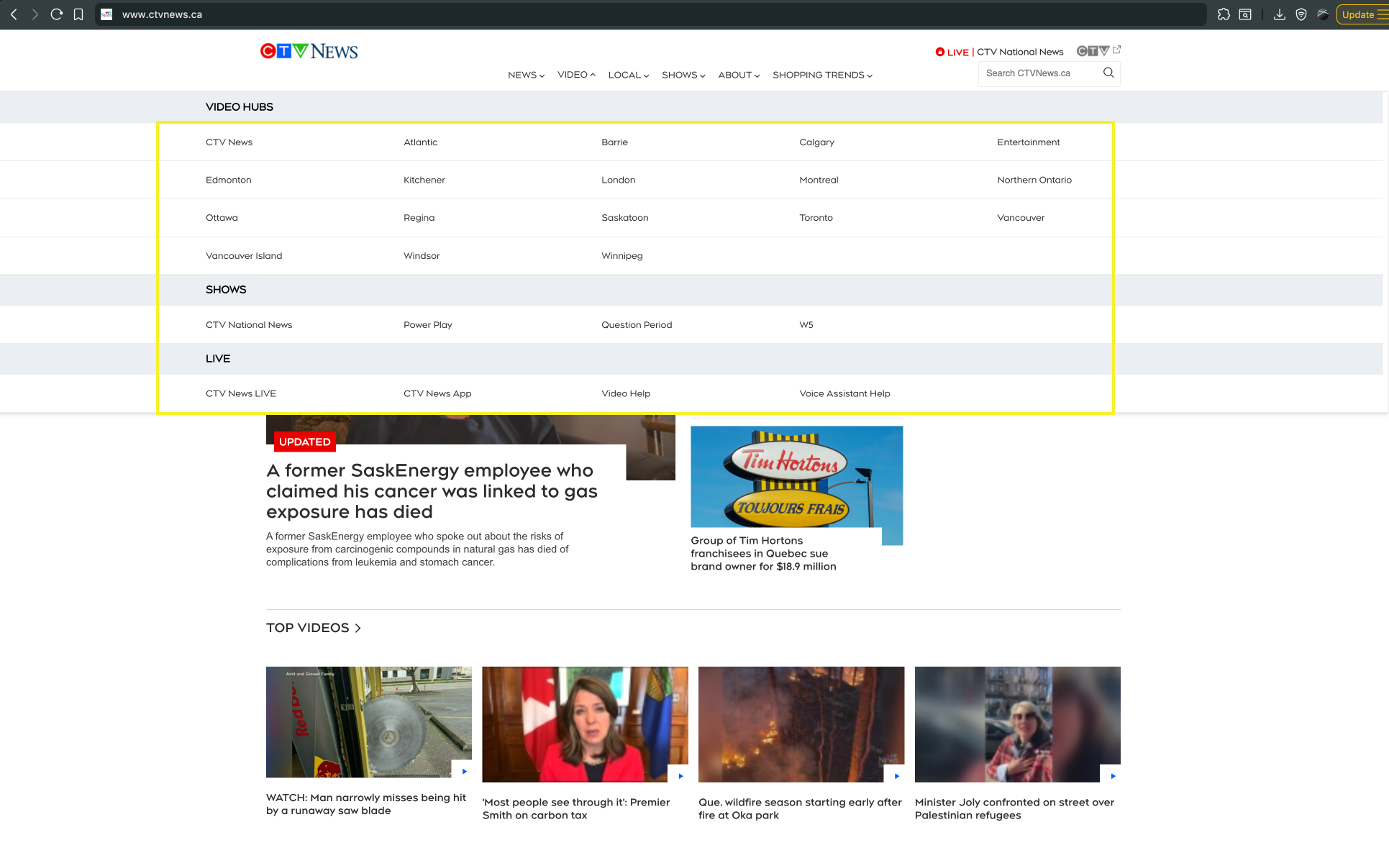
Before any user testing, I met with product and editorial leads to review business priorities and how the existing navigation was performing. We walked through click data and heatmaps to see which sections users gravitated to, ignored, or struggled to reach.
From there we aligned on success measures for the new navigation: cut the number of top-level items, create a clearer hierarchy between main sections and sub-sections, and make it easier for users to reach Canada, World, Local, and major coverage areas without scanning a 25-item header.
I also synced with engineering and content operations to understand constraints of the new content management system: how many links the header could support, what type of dropdown behaviour was feasible, and how navigation changes would fit into existing templates and workflows.
To understand how users naturally think about CTV News content, I ran open and closed card sorts with 15 regular readers. Each user sorted 22 topic cards (Canada, World, Politics, Business, Health, Weather, wars, Wildfires, etc.) into groups that made sense to them, then named those groups.

Key Takeaways
Using the card-sorting insights and CMS constraints, I drafted a simplified navigation model that reduced noise at the top while keeping depth where it mattered.
.svg)
The project showed that small structural decisions add up quickly. Once we aligned on fewer, clearer categories grounded in user research, everything else like click paths, content ownership, and future changes became easier.